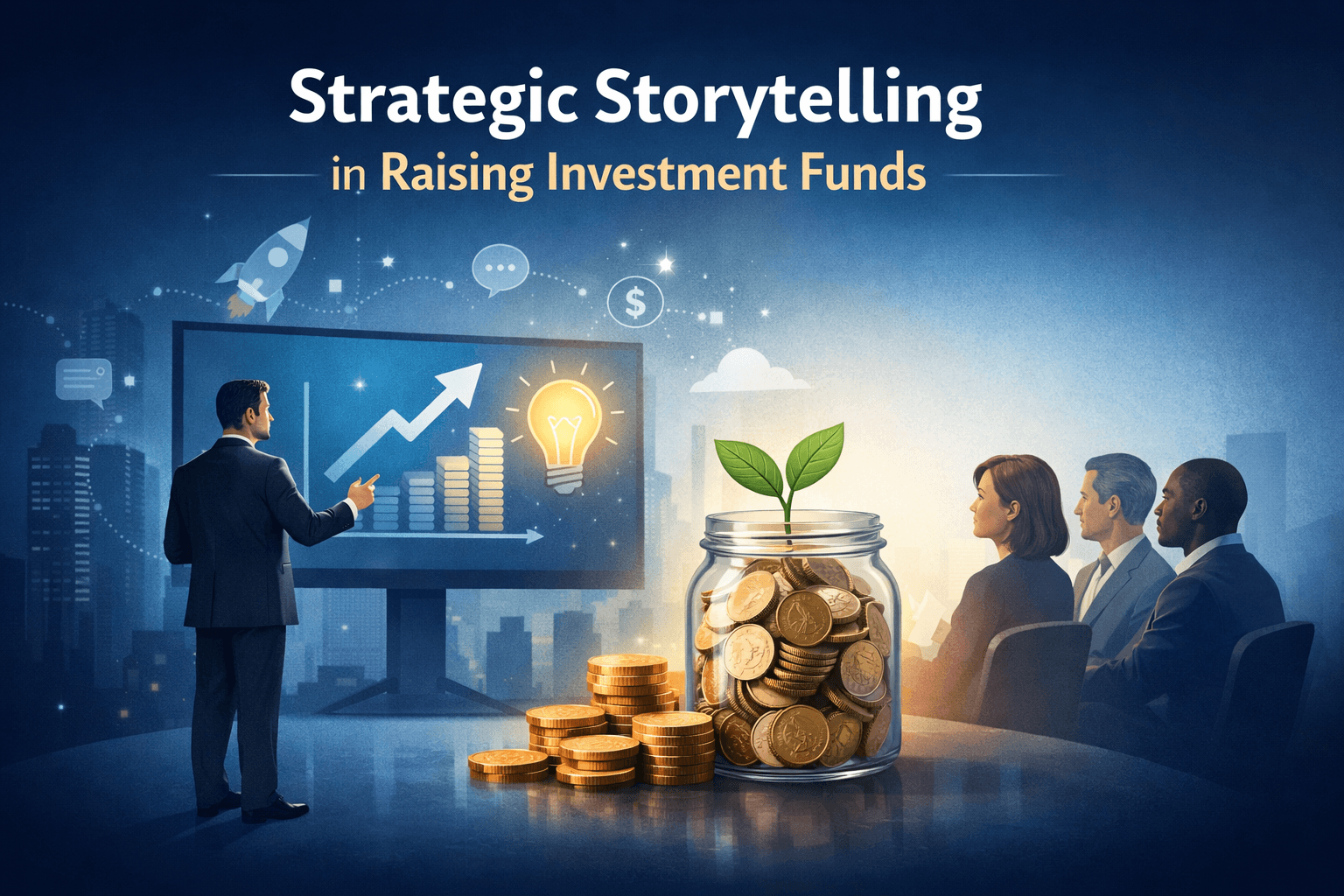
In today’s high-stakes capital-raising market, more than merely displaying a series of numbers and market insights goes toward successfully capital raising. More and more investors are attracted to projects that have a strong story behind them-one that speaks to their values and passions, one that represents vision and has strong developmental and growing implications. Behind every successful capital-raising try must be a well-organized fundraising strategy where story-telling plays a critical role.
Storytelling as a Tool for Building Narrative Capital
"Narrative capital" typically refers to the unquantified benefit a start-up company or a growing concern can generate from the ability to tell a cohesive and believable story. While financial capital provides a clear indication of any assets that a company possesses in a concrete manner, narrative capital has to be established through communications that inspire trust and a buzz of excitement. A good storytelling capability has the power to transform abstract concepts into concrete visions.
When entrepreneurs incorporate narrative capital in their thinking, they are essentially taking the company's mission, its successes, as well as its potential, and presenting them in a manner that the investors can embrace. This is a delicate process because the narrative should be motivational in a manner that inspires, but at the same time incorporate facts. This is where business storytellingcomes into play.
Business Storytelling: Making Data Human
Numbers and metrics are still crucial for investor decisions, but data alone seldom closes the deal. Business storytelling enables founders to set the figures into context within the broader story of purpose, growth trajectory, and problem-solving capability.
Think of a start-up focused on renewable energy solutions. While pure technical specification and projection for ROI may impress an analyst, it does little to engage an investor emotively. Business storytelling allows the founder to articulate how the technology is transforming communities, reducing environmental impacts, and aligning with global sustainability trends. This turns the investment proposition into one that will appeal to more than just financial rationality; it will make ethical and strategic sense.
Good business storytelling also explains multifaceted concepts and makes the start-up relatable and understandable. For sure, investors have a greater chance of committing capital when they get how a business works, what sets it apart from the competition, and why it should matter. This, in fact, is what Capital Storytelling implies: telling the story of the business in a manner that directly helps fundraising needs.
Crafting a Compelling Investment Narrative
An investment narrative is the integrated tale that is used to persuade investors of a company’s unique prospects. It takes a company’s vision, insights, and track records, and builds a compelling argument about why the company is poised to succeed. A good investment story is created by paying attention to these three aspects:
Origin Story and Vision: Investors are also interested in learning about why a given company exists and what drives the team. Telling an origin story is a sign of having passion and authenticity while having a vision is a sign of having direction.
Market Opportunity and Differentiation: Data about the target market, competitive landscape, and growth potential must be woven into the narrative in a way that highlights the company’s unique advantage.
Traction and Potential: The achievements and reviews from customers and early outcomes have ensured that the business model is valid. It has a future-oriented plan that defines possible return on investment.
By aligning these elements, the investment narrative transforms into a persuasive framework that not only informs but also inspires action.
Aligning Fundraising Strategy with Storytelling
Incorporating the use of storytelling into a fundraising strategy for the purposes of raising funds is more about telling the truth than making up stories. Strategic storytelling requires understanding the audience, structuring the story around their motivations, and having the consistency of all the messages delivered to the investors.
For instance, in the case of early-stage investors, they will want to see the ability to deliver on the project as well as the potential for innovation. Here, the startup will need to showcase its approach in terms of expertise, creative problem-solving, as well as initial success stories when presenting the fundraising strategy to the investors. Later-stage investors will want to see scalability, market share, as well as financials, which will then need a different narrative for the fundraising strategy.
The Psychological Edge of Storytelling in Fundraising
Storytelling provides another psychological benefit. Remember, people tend to recall stories better than just facts. Since statistics and facts are placed in a form of storytelling, entrepreneurs have a better chance of keeping these pieces of information in mind and associating with them personally. All this leads to trust, an important element in any investment.
Furthermore, storytelling gives investors a shared vision. When investors are able to view themselves as part of the journey of the company, they will not only invest money but will also contribute towards strategic ideas through their mentorship and additional resources. This is why having narrative capital is just as important as financial capital.
Conclusion
In the crowded terrain of fundraising opportunities, the power of storytelling has proved to be the newest tool of differentiation. Adding the art of business storytelling, capital storytelling, or the investment storytelling element to the mix of fundraising options enables the entrepreneur to share visions and inspire confidence. Narrative capital adds an element of allure to the business so that investors not only understand the business but also believe in the journey.
At its best, storytelling in fundraising is actually integrating logic and emotion, vision and execution, and data and personal connections. Those who can do this well not only raise money, they build long-term relationships and create a foundation for long-term growth. In today's world of investment and finance, storytelling is not optional-it is central.