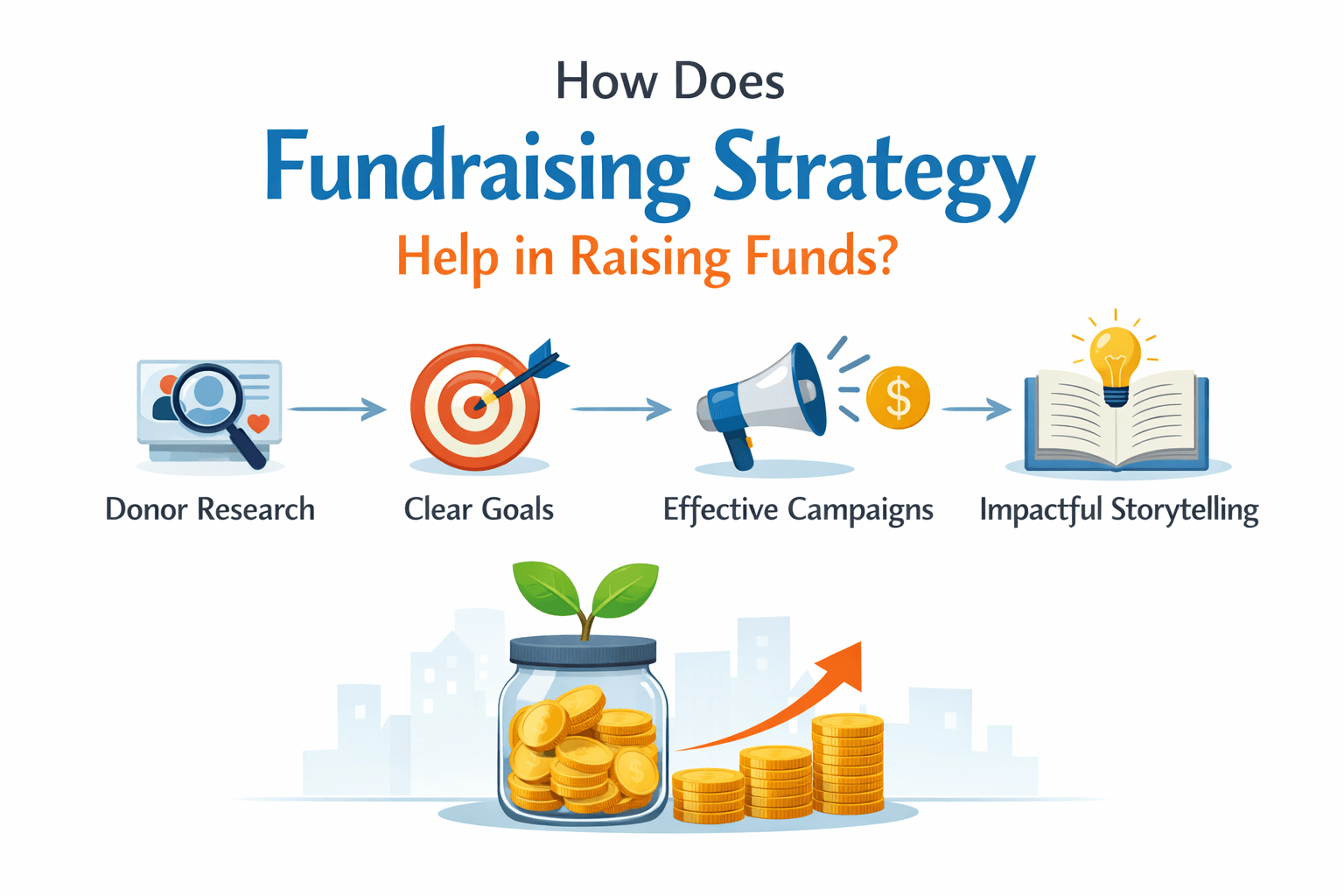
Raising funds is not just about asking people for money.
It is about making people believe in your cause. It is about helping them understand why your work matters. And most importantly, it is about building trust.
Many organizations struggle with fundraising because they only think about the next campaign and keep their focus on short-term targets. They generally try different ideas on random basis and hope something works.
But here`s the truth- fundraising does not work well without a plan, that is where a fundraising strategy becomes important.
Without a structured approach, fundraising often becomes reactive instead of proactive. Teams wait for urgent needs before taking action. This creates pressure and weakens communication. A clear strategy changes this mindset. It allows organizations to prepare in advance, build relationships early, and approach donors with confidence rather than desperation. That shift alone can make a big difference in results.
What Is a Fundraising Strategy?
A fundraising strategy is simply a clear plan.
It tells you:
How much money you need?
Where you will raise it from?
Who you will approach?
What you will say?
How you will communicate?
It is like having a direction before starting a journey.
Without a proper fundraising strategic plan, fundraising feels confusing. Teams run campaigns without clear goals. They approach donors without preparation. Sometimes they raise funds, sometimes they do not. Results become unpredictable.
With a strategy, things become clearer and more organized.
It also helps different team members understand their roles. When responsibilities are defined, everyone works in alignment. Communication becomes smoother, deadlines are respected, and progress can be tracked properly. Instead of scattered efforts, the whole team moves in one direction.
Does Fundraising Strategy Brings Clarity to Goals?
When you plan properly, you know exactly what you are working towards.
For example, if you need funds for a new education program, your strategy will clearly define:
- The total budget
- The purpose of the funds
- The timeline
- The possible funding sources
This clarity makes your message stronger.
Clear goals also make it easier to explain your mission to supporters. When you speak with confidence and specifics, donors feel assured that their money will be used wisely. Clarity removes doubt, and when doubt is removed, decisions become easier for potential supporters.
Fundraising Strategy Builds Trust
Trust is everything in fundraising.
People do not give money just because you ask. They give when they feel connected to your mission.
A good strategy helps you communicate regularly. Instead of sending random donation requests, you share stories, updates, and real impact.
You show:
- Where the money is going
- What change it is creating
- How lives are improving
When donors see results, they feel happy about their contribution. And when they feel valued, they support you again.
Trust grows slowly through honesty and consistency. When you openly share both achievements and challenges, supporters feel respected. They see transparency, and transparency builds credibility. Over time, this credibility becomes the foundation of long-term financial support.
Fundraising Helps You Reach the Right People
Not everyone is the right donor for your cause. Some people connect emotionally. Some want detailed reports. Some companies may want visibility and brand alignment.
A fundraising strategy helps you understand different types of donors:
- Individual supporters
- Corporate sponsors
- Foundations
- High net worth individuals
When you speak to each group in the right way, your message becomes stronger. And when your message feels relevant, people are more likely to respond.
Fundraising Strategy Saves Time and Effort
Fundraising takes energy.
Without a plan, teams may spend time on activities that do not give results. They may try different platforms without knowing what works. A strategy helps you focus on the right activities. It helps you set clear targets and measure progress.
Instead of guessing, you act with purpose, this saves time. It also reduces stress and encourages long-term support. Many organizations focus only on finding new donors, but keeping existing donors is just as important, sometimes even more.
A good fundraising strategy includes:
- Thank-you messages
- Regular updates
- Impact reports
- Personal communication
When donors feel appreciated, they stay connected.
Retention is often more cost-effective than constant outreach. When existing supporters continue giving, you spend less effort searching for replacements. A thoughtful follow-up system strengthens loyalty and creates ambassadors who speak positively about your organization within their own networks.
Long-term supporters give stability
Long-term supporters give stability to your organization. They trust you; they believe in your mission and that trust becomes your biggest strength.
When you have a clear plan, you can track what is working and what is not. If a campaign does not perform well, you can understand why and improve next time.
Step by step, your fundraising system becomes stronger. Without a strategy, mistakes keep repeating, but with a strategy, learning becomes part of the process.
What About Fundraising Advisors?
Sometimes organizations take help from fundraising advisory.
Fundraising advisors bring experience and fresh ideas. They can guide you in improving your approach, writing better proposals, and finding new funding opportunities.
But even with outside help, your mission should stay at the center. Strategy works best when it reflects your real purpose and values.
Final Thoughts
Fundraising is not just about donations; it is about creating real impact. And to bring impact, it needs consistent financial support.
A fundraising strategy gives you direction, brings clarity, builds trust and strengthens relationships. It helps you scale faster and reduces the stress of struggling every few months.
When planning replaces guesswork, fundraising becomes a smooth process and when relationships replace one-time requests, support becomes long-term.
A good strategy does not just help you raise funds, it helps you build something that lasts.
In the end, fundraising success is rarely accidental. It is built through preparation, patience, and meaningful communication. When your organization knows where it is going and why, supporters feel that confidence. And when confidence is shared, growth becomes natural and sustainable.